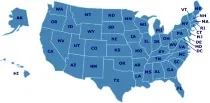
As home schooling grows as a movement, there is increasing politics from anti-home school forces to try to interfere with or legislatively control home schoolers. This has come to include legislative attempts to force home school students to take standardized tests along with public school students. But mandatory testing doesn't work in public schools, and it won't work for home schoolers.
In 1980, Marlene Bumgarner, a homeschooling parent, hosted author John Holt in her home while he was in California for a lecture tour. While he played in the garden with her two children, John and Dona Ana, she interviewed him for the bimonthly magazine Mothering. In this article, Holt answered such questions as, "What is your philosophy of learning?", "Why homeschool?", and "What about the child's social life?"
Why would a family with no religious affiliation opt out of the standard school model? The short answer is that the stakes were too high not to. The long answer is in the rest of this article. From freedom, to a miserable experience for those working in the school system, to excessive homework, to unnatural socialization ideals in school settings, to the ability to follow your own path, this mom lists the reasons that compelled her to strike a different plan for her child.
The National Black Home Educators Resource Association (NBHERA) is a resource network founded by Eric and Joyce Burges in July 2000. This association encourages, supports, and offers fellowship to families who are exploring benefits of home education. NBHERA was created to serve the African American community by providing assistance with information about getting started homeschool, networking/connecting veteran families with new families, recommending resources such as books, music, films, speaking information, curriculum, etc. NBHERA’s mission endeavors to empower parents to educate their children for excellence.
Our entire value system stems from our experiences. The influences of a classroom or a book are minor compared to the plethora of impressions that bombard us constantly. Every teacher knows that by the time a child can sit at a school desk, that child has already received a majority of his education. The child has already developed the attitudes, drives, tendencies and emotions that will shape almost everything else he will do the rest of his life. That education did not come from a book; it came from experiential interaction. All the teacher can do at this point is offer some direction and a suggestion here and there. In fact, teachers take a back seat to the true teachers of life: parents. When a human being is most receptive to influences, then those influences have their greatest impact. A child is an open book which has engraved onto it's impressionable pages the most basic messages - transmitted by the parent.
One of the most laughable defenses of the government-operated school system, sure to come from the keyboard of hundreds of people who participate in on-line discussion of education policy, is the notion that Nobel Prize winners and other eminent persons prove the effectiveness of our school system. Well, what do the Nobel Prize winners themselves have to say about this? This articles includes some quotations by or about Nobel Prize winners, describing their views of school.
Large traffic email list whose stated purpose is to move out of comfort zones and critically examine beliefs, ideas, and viewpoints about learning, and seek a deeper understanding of unschooling and more respectful relationships with one's children.